CES 2026 Key Highlights from a 2025 Participant (feat. SAMSUNG, SK, LG)
Hello! I’m Hyunjun Park from the HyperAccel ML Team.
CES, which started in Las Vegas on January 6th, successfully concluded on January 9th. I participated in last year’s (2025) CES and operated the HyperAccel booth, and based on that experience, I’d like to review this year’s (2026) CES. Some might wonder why I’m posting this now instead of last year.

The reason is simple: we didn’t have a tech blog last year. As someone who participated last year, reading articles about CES 2026 made me curious about how this year went, and the excuse of writing for our tech blog gave me the opportunity to learn about this year’s CES. This post will be helpful for those who:
- Want to know CES statistics and key highlights
- Are curious about CES booth preparation and operation experience
- Want to learn about Korean conglomerates’ (LG, SAMSUNG, SK) exhibits and concepts
CES Statistics and Key Highlights
CES is the world’s largest consumer electronics exhibition held annually since 1967. From a company’s perspective, it’s an opportunity to showcase technology for marketing and branding, while visitors can understand the latest technology trends. South Korea ranks third in company participation after the United States and China, and holds the world record for the most innovation awards, demonstrating Korean technological capabilities to the world.
| 2025 | 2026 | |
|---|---|---|
| Slogan | DIVE IN - Connect. Solve. Discover | innovators show up |
| Keywords | AI & Robotics, Mobility, Extended Reality, Smart Home, Digital Healthcare | Physical AI, Spatial Computing, Digital Health, Mobility, Smart Home |
| Participating Countries & Companies | 160+ countries, 4800+ companies | 150+ countries, 4500+ companies |
| Participating Korean Companies | 1000+ companies | 1000+ companies |
| Korean Best of Innovation Awards | 15 out of 34 (44%) | 15 out of 30 (50%) |
| Korean Innovation Awards | 219 out of 458 (47.8%) | 222 out of 367 (60.5%) |
My first impression of CES was that it was much larger than I expected. It felt like walking around a university campus. Even though I had organized the booths I wanted to visit beforehand, it was difficult to find the booths I wanted, and moving to different campuses required shuttle buses with long waiting lines, making route planning challenging.
While pondering this, I applied on-site for a booth tour organized by the K-STARTUP integrated pavilion, which allowed me to see notable global companies’ booths with an optimized route. It was great to easily get an overview of global company booths, but on the other hand, I was disappointed that I couldn’t focus on the booths I wanted to see. I recommend using booth tours if you don’t have specific needs, but if you have specific needs, I recommend planning your route thoroughly in advance.
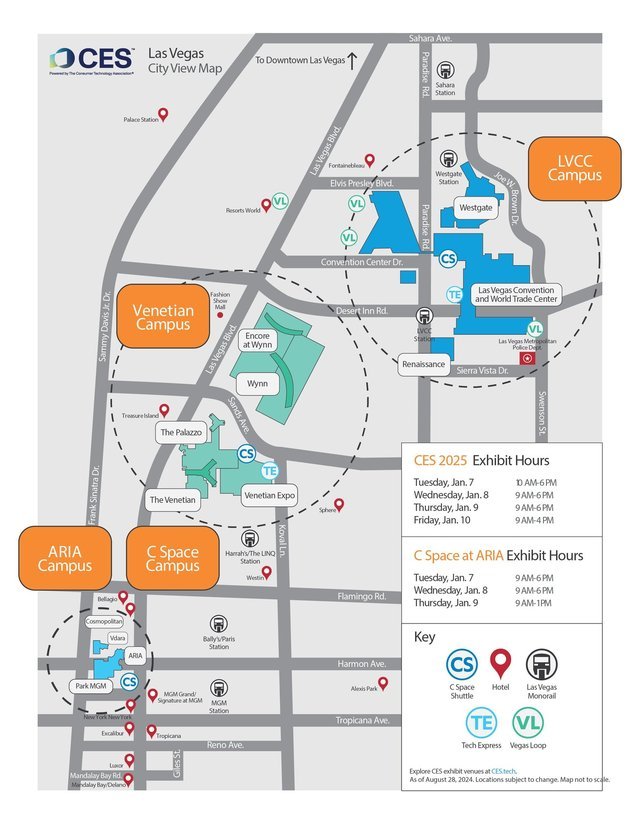
KOTRA provides annual analysis on viewing points and routes. Although I didn’t write it, I think it’s well-written and would like to recommend and share it.
CES 2025 Guide: https://dl.kotra.or.kr/pyxis-api/2/digital-files/51efe51a-718d-4f3a-9182-12c424384f7b
CES 2026 Guide: https://dl.kotra.or.kr/pyxis-api/2/digital-files/719ffe16-6ece-4214-969f-b663985315d3
CES 2025 Participation Experience
The Ministry of SMEs and Startups is conducting the “Super Gap Startup 1000+” project to foster startups, and as part of this project, they gather Korean startups to operate a CES exhibition pavilion annually. It was well-organized so that even small startups could participate comfortably.
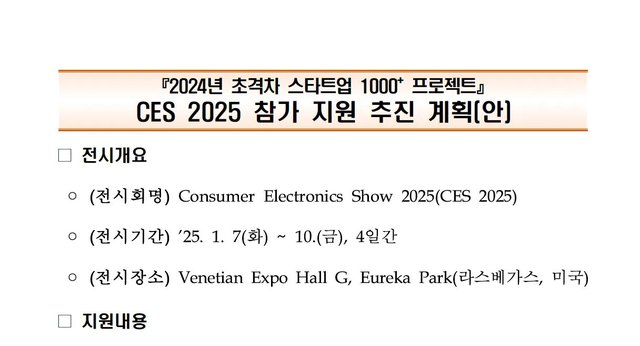

Thanks to lowering the barrier to entry for CES, many companies have been participating in the K-STARTUP integrated pavilion both last year and this year. This year, 470 companies from 38 organizations participated. Looking at Korea as a whole, about 1,000 companies participated. I believe this support is one of the key driving forces behind Korea receiving the most CES innovation awards.

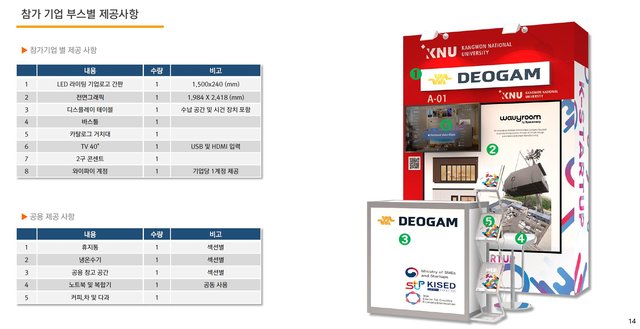
From an exhibitor’s perspective, thanks to the K-STARTUP branding, visitors of various nationalities and fields came to our booth. We were able to talk with numerous clients, investors, and partners. From a company standpoint, it was a valuable opportunity to build relationships with partners and brand ourselves to clients, and personally, it was a great opportunity to gain insights.
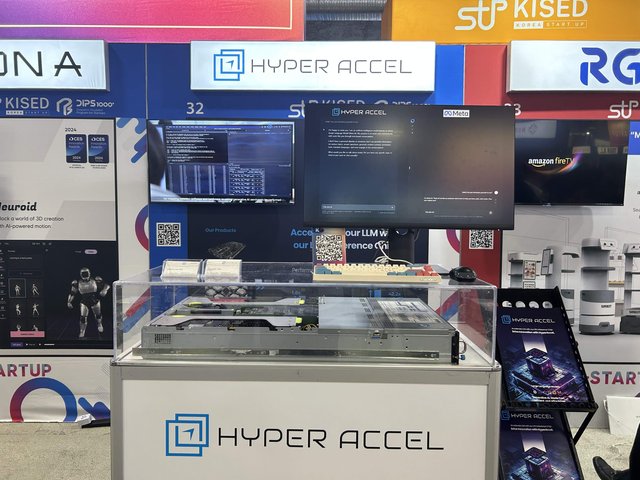
Thanks to their great support, despite being our first time, we were able to focus on “exhibiting” rather than just “participating” and successfully completed our CES booth operation. This is a photo of our booth from last year. The server shown in the photo is our first-generation FPGA-based server, which was the first step in developing next-generation AI chips for LLM inference.
Korean Conglomerates’ CES Exhibition Trends
There were many global companies that surprised everyone with new technologies, but when I was actually at the venue, I was more excited to see Korean companies standing shoulder to shoulder with global companies on the world stage. (National pride!) Therefore, in this section, I’d like to explore how Korean conglomerates Samsung, LG, and SK operated their CES exhibitions by comparing 2025 and 2026.
| Company | Category | 2025 | 2026 |
|---|---|---|---|
| LG | Innovation Awards | 24 products including LG OLED TV | 18 products including webOS platform |
| Highlights | Structure made of 28 OLED TVs | Home robot CLOi that helps with housework | |
| Samsung | Innovation Awards | 29 products including Galaxy Buds3 Pro | 27 products including quantum security chip |
| Highlights | Smart home with all appliances connected | World’s first 130-inch Micro RGB TV | |
| SK | Innovation Awards | HBM3E, etc. | HBM4, etc. |
| Highlights | Sole Best of Innovation Award in memory category | World’s first HBM4 16-layer 48GB reveal |
LG in CES
I felt that LG strives to make a visual impression on the audience. Among all the exhibitions I saw last year, LG’s exhibition was the most impressive.
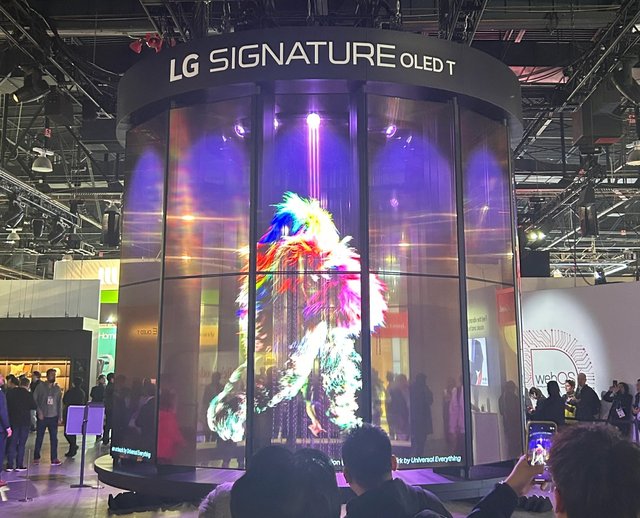
Last year, LG displayed 28 transparent/wireless OLED TVs in a circular formation to create a single structure showcasing their technological prowess. This LG showcase not only overwhelmed the surrounding space but also graced the cover of the official CES magazine.

When you entered the booth, you could see the actual products up close, and they looked as if images were appearing on windows rather than TVs, making them aesthetically excellent. For reference, LG Signature OLED TV has won the Best of Innovation Award for four consecutive years from 2023 to 2026.
This year, LG launched the home assistant CLOi and once again made headlines.
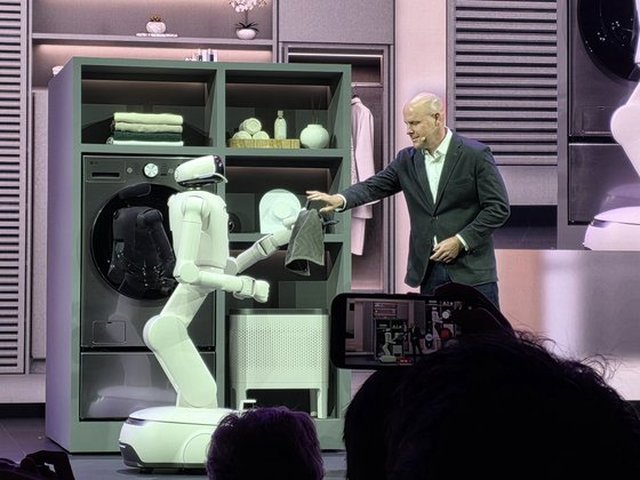
In the actual demo, they showcased various demonstrations such as taking milk out of the refrigerator, folding towels, and putting in laundry. Personally, I thought it wasn’t yet at a level of completion for actual commercialization, but it was meaningful as an early version of a home robot. Given the speed of AI development, I’m really looking forward to seeing how much more complete it will be next year.
SAMSUNG in CES
Samsung presented the story of smart homes with a museum concept at CES both last year and this year.

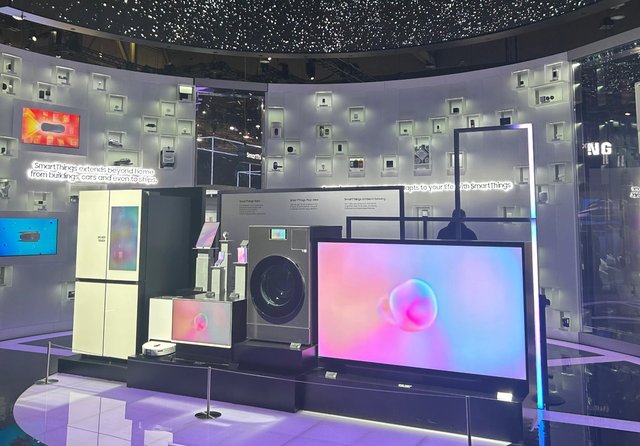
Last year, they displayed how AI connects appliances, increases productivity, and enables efficient energy use. They particularly emphasized the smart home ecosystem where refrigerators, washing machines, air conditioners, and all appliances are connected through the SmartThings platform.
This year, they exhibited how AI can provide enjoyment, convenience, and care in daily life.


The world’s first 130-inch Micro RGB TV displayed in the main hall was enough to capture the audience’s attention. Additionally, they showcased their vision of AI permeating daily life through the Bespoke AI refrigerator with Google Gemini and wearable-based health management solutions. Samsung’s approach of integrating AI across all areas from displays to home appliances to healthcare was impressive.
SK in CES
SK showcased HBM as their main technology both last year and this year. I’d like to carefully share my personal opinion: SK is relatively at a disadvantage (?) when it comes to demos because it’s difficult to visually showcase core technologies due to the nature of memory semiconductors.

However, last year’s SK exhibition hall entrance gave a feeling of entering a cave behind a waterfall, which was sufficient to make people stop and attract their attention. I found out that they implemented graphics that visualized bits like waves to represent that it’s a memory company. And the mere existence of HBM is already the hottest topic in the world, so many people visited.
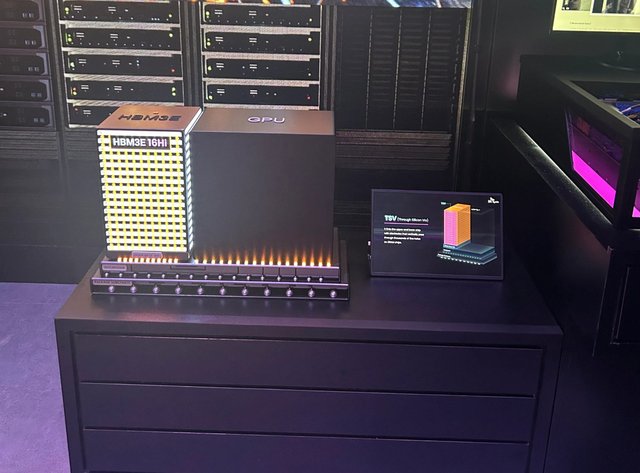
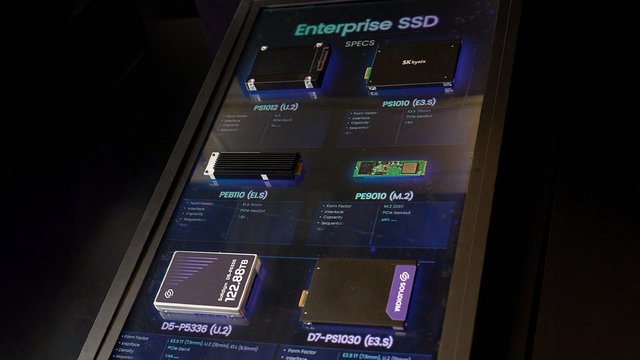
Since I work at a semiconductor company, I was naturally more interested. I was able to see the actual products and specifications of various memory semiconductors including HBM, which was great. To briefly explain HBM, which has captured Jensen Huang’s love: HBM (High Bandwidth Memory) is a product that vertically connects multiple DRAMs to increase bandwidth, and its key feature is that it has a revolutionary faster data transfer speed compared to conventional DRAM. HBM3E, displayed at the top, means the Extension version of HBM3, and it’s such a hot model that more than half of HBM shipments in 2026 are expected to be HBM3E.
This year, they first revealed HBM4 16-layer. HBM4 goes beyond simple performance improvements and changed the entire architecture. They doubled the bandwidth and added logic processes to the bottom layer of memory, enabling computation functions near the memory.
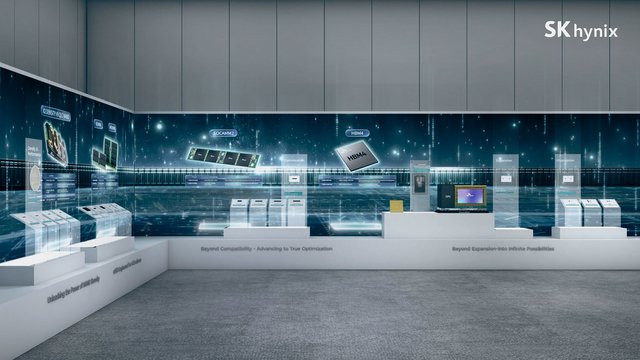
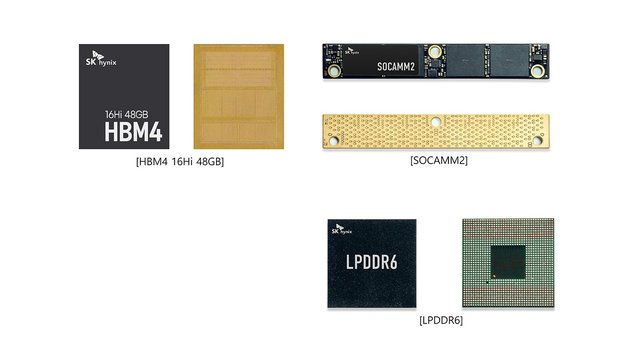
It was impressive to see SK Hynix, which is leading HBM—a key component in the AI era—receive global attention at CES. I look forward to SK Hynix’s continued success in the memory semiconductor field. (Please make memory cheaper)
Conclusion
CES once again proved it’s the World’s Best Show through its scale, the efforts of many companies, and tremendous attention from around the world.
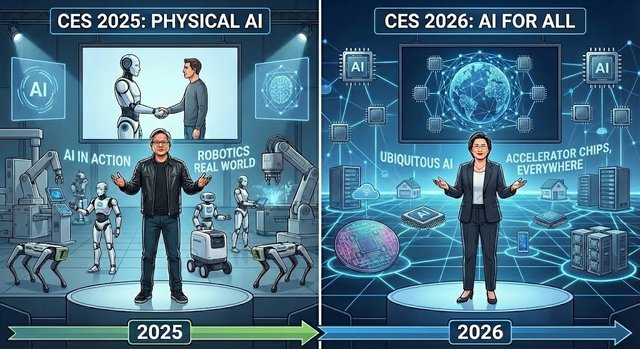
At CES 2025, Jensen Huang said that the next frontier for AI is Physical AI. Now, one year later, looking at CES 2026, what stood out most was that AI is no longer confined to software but is expanding into the physical world. As a prime example, LG’s CLOi demonstrated its use in actual homes, and although not covered in this post, dancing and working robots were easily found at various booths.
And at CES 2026, Lisa Su said that a world is coming where billions of AI agents will run 24/7 in the background for all of humanity. As such, AI is increasingly penetrating human life, and to support this demand, hardware development is rapidly progressing—not only NVIDIA GPUs but also SAMSUNG and SK’s HBM4. This trend will accelerate further.
I believe that for a company to succeed (=achieve large revenue), three elements are needed: “clear market,” “innovative product,” and “great team.” And looking at this year’s CES, I felt that the current AI market is growing at an unprecedented pace, and many Korean companies are receiving global attention in this environment. Sending respect to the many companies that achieved remarkable technological advances in just one year, I look forward to Korean companies’ activities at CES 2027.
Postscript
HyperAccel Hiring Notice
This opportunity also served as a moment to reflect on HyperAccel. For us, an NPU company, the “clear market” couldn’t be better, and the “innovative product” LPU has already completed functionality and performance verification through FPGA and is waiting for ASIC chip release. We are waiting for you to join us in building the final element—a “great team.”
Career Site: https://hyperaccel.career.greetinghr.com/ko/guide
If you’re interested, please feel free to contact us anytime!